
ABOUT US

Empowering Science with Precision and Simplicity!

Congratulations! ProNet Biotech and Nanjing Agricultural University signed a contract to co-establish Biosynthetic Process Technology Research Institute.

Release time:

2023-06-28

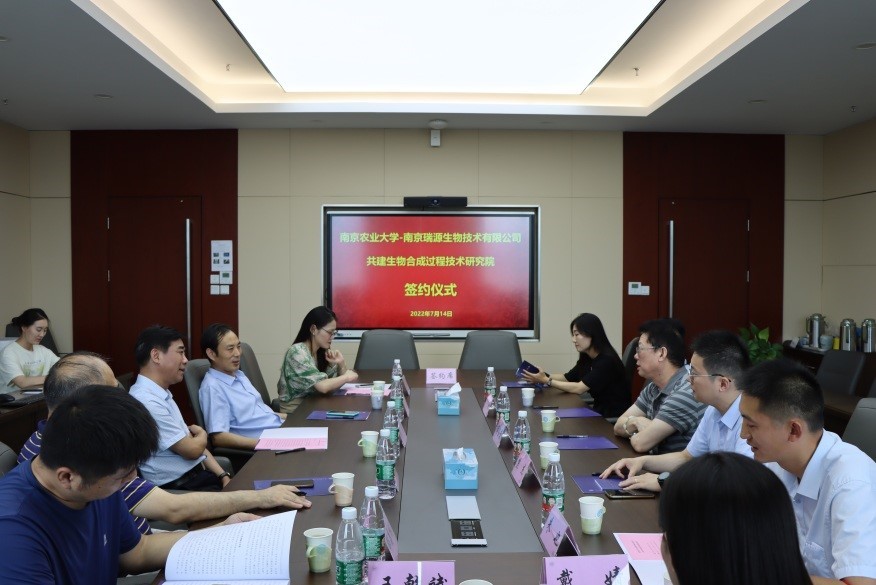
On the afternoon of July 14, 2022, the signing ceremony of Biosynthetic Process Technology Research Institute jointly established by Nanjing Ruiyuan Biotechnology Co., Ltd. and Nanjing Agricultural University was held at the Frontier Cross Research Institute of Nanjing Agricultural University. Dou Daolong, President of Frontier Cross Research Institute, Man Baoming, General manager of Qixia Science and Technology Industry Development Co., LTD., Xu Quan, Director of Social Cooperation Department of Nanjing Agricultural University, Liu Caozhi, general manager and Zhu Ye, Vice general manager of Nanjing Ruiyuan Biotechnology Co., LTD., and Cui Zhongli, Professor of Life Science College of Nanjing Agricultural University, attended the ceremony. Sheng Xin, deputy secretary of the Party Branch of Frontier Cross Research Institute, presided over the signing ceremony.
 

1


Dou Daolong introduced the basic situation of Nanjing Agricultural University and Frontier Cross Research Institute. Mr. Zhu introduced the basic situation of Nanjing Ruiyuan Biotechnology Co., LTD., and expressed his gratitude to the university and Frontier Cross Research Institute for their long-term support and help to the development of the company. Prof. Cui introduced the preparation process, positioning and future development planning of the Biosynthesis Process Technology Research Institute. On behalf of Nanjing Qixia Hi-Tech Industrial Development Zone, General Manager Man Baoming congratulated on the successful signing of the contract between the two parties and briefly introduced the basic situation of Nanjing Qixia Hi-Tech Industrial Development Zone.


1


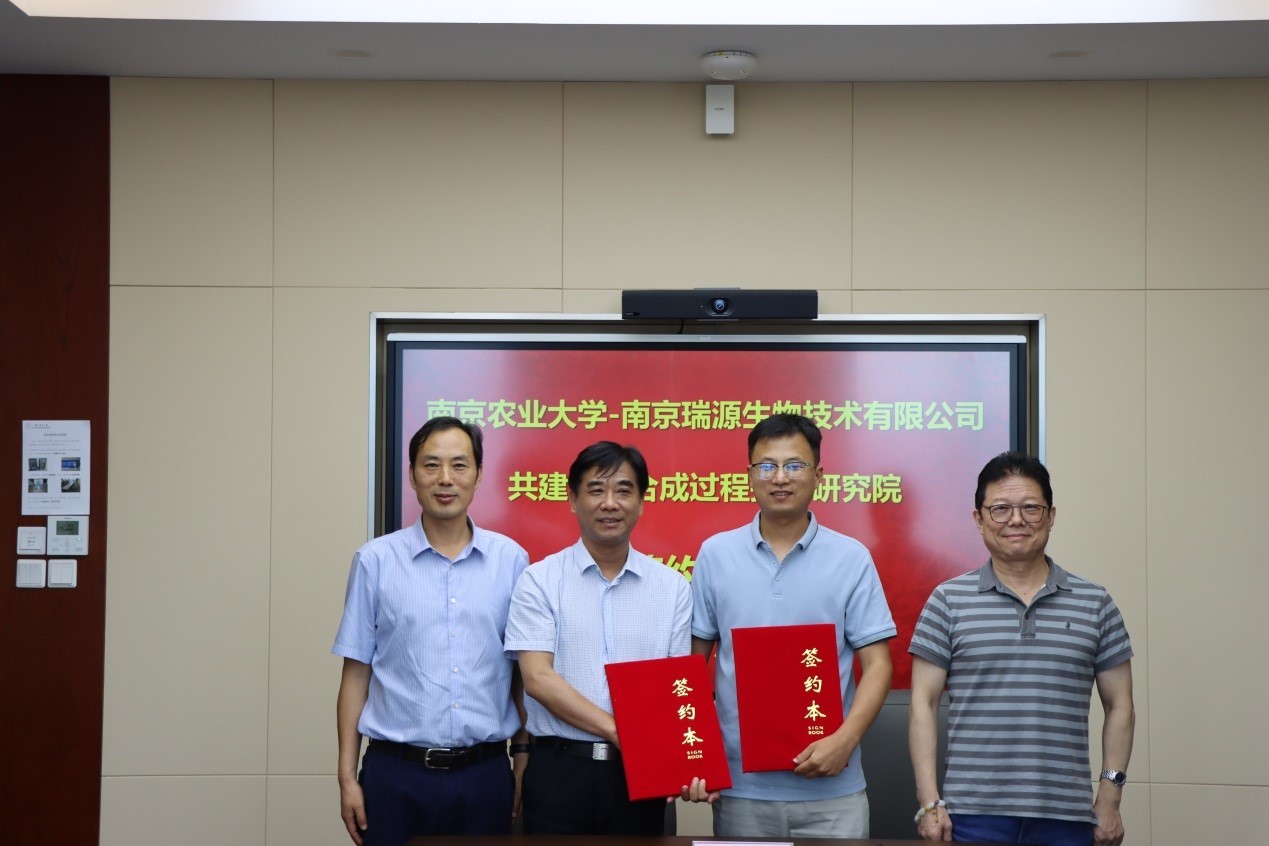
Director Xu Quan and General Manager Liu Caozhi signed the cooperation agreement on behalf of both the university and the enterprise in the presence of President Dou Daolong and General Manager Man Baoming.
 

q


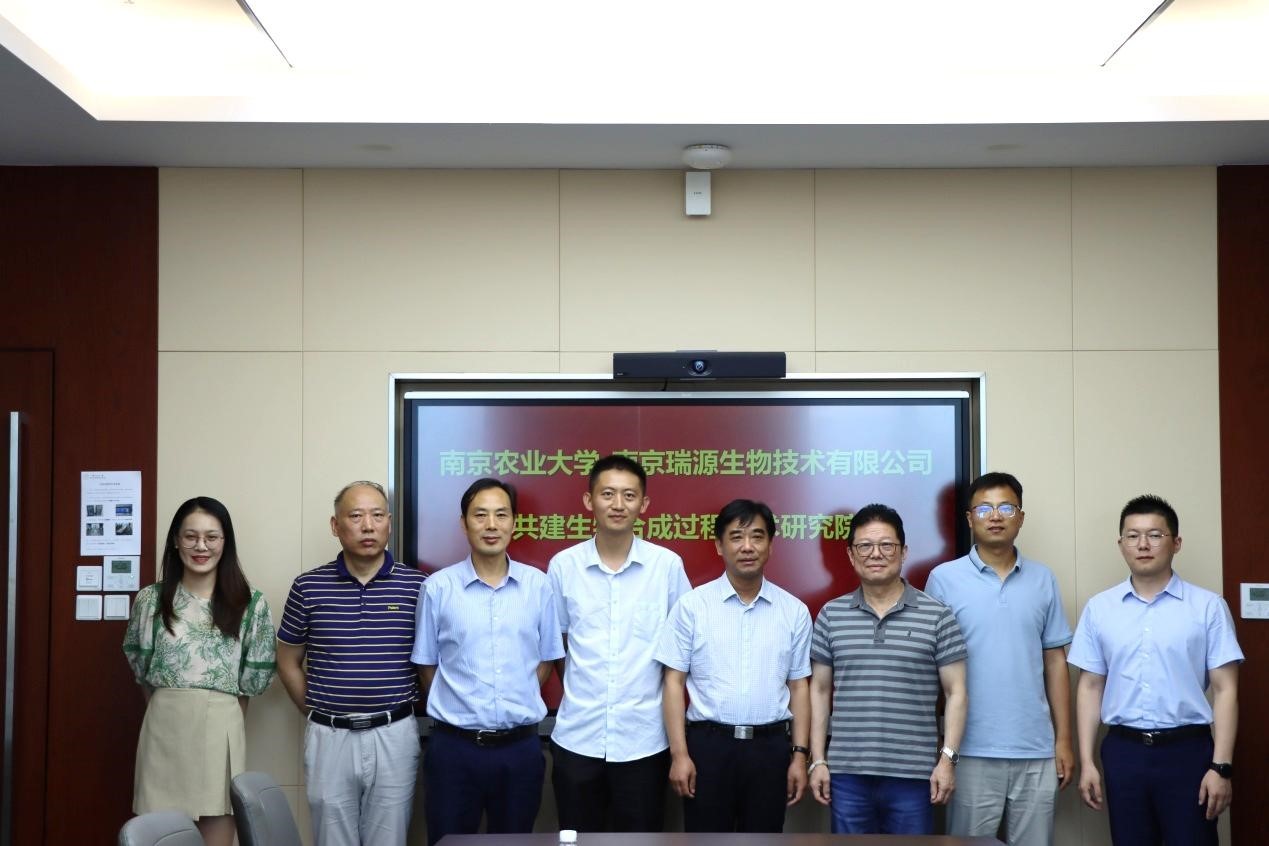
Director Xu Quan put forward two hopes in his summary. First, he suggested that both sides clarify the system and mechanism of the operation and management of the institute, fully mobilize the enthusiasm of both sides, give play to their respective advantages, and achieve a win-win situation. Second, actively integrate school, enterprise and local resources to jointly promote the construction and development of the institute.
 

1


Finally, Deputy Secretary Sheng Xin said that the two sides will take the institute as the carrier to carry out in-depth cooperation in the cultivation of graduate students, optimization and screening of personalized medium, cell line transformation and the adaptability of cells and viruses.

Related News

2025-07-16


Literature Sharing | Interaction of PsMYB4 with PsEGL3 inhibits anthocyanin biosynthesis in tree peony yellow flowers

This study explores the molecular mechanism behind yellow flower formation in tree peony, a highly valued ornamental plant in China. Researchers identified two transcription factors, PsMYB4 and PsEGL3, that are highly expressed in a yellow-flowered cultivar.

2025-07-10


Literature Sharing | Putative Upstream Regulators DoNF-YB3 and DoIDD12 Correlate with DoGSTF11 Expression and Anthocyanin Accumulation in Dendrobium officinale

This study explores the role of the DoGSTF11 gene in Dendrobium officinale, a traditional medicinal herb. While previous research has focused on polysaccharides and alkaloids, this work addresses the lesser-known anthocyanin pathway. The researchers found that DoGSTF11 is highly expressed in the purplish variety of D. officinale and is localized in the nucleus and cell membrane, though it lacks transcriptional activation ability. Overexpressing DoGSTF11 in tomato led to increased anthocyanin accumulation, suggesting it plays a role in anthocyanin transport or sequestration. Protein interaction studies revealed that DoGSTF11 interacts with DoGST31, and that DoIDD12 and DoNF-YB3 may regulate its expression. Overall, the findings highlight DoGSTF11 as a positive regulator of anthocyanin accumulation and offer new insights for flavonoid metabolic engineering in D. officinale.

2025-07-08


Literature Sharing | Chinese cabbage orphan gene BR3 confers bolting resistance to Arabidopsis through the gibberellin pathway

Premature bolting affects yield and quality in Chinese cabbage, highlighting the importance of identifying bolting resistance genes. This study identifies an orphan gene, BR3 (BOLTING RESISTANCE 3), in Arabidopsis thaliana as a positive regulator of bolting resistance. BR3 is expressed during the seedling and flowering stages and localizes to the plasma membrane and nucleus. Overexpression of BR3 (BR3OE) delays bolting and flowering under both long-day and short-day conditions, with increased rosette leaf number and reduced plant height. Key flowering genes are downregulated in BR3OE plants. GA₃ treatment induces early flowering in both BR3OE and wild type (WT) plants, but BR3OE still flowers later than WT. In Chinese cabbage, BR3 shows co-expression with DELLA genes BrRGA1 and BrRGL3, suggesting a regulatory role through the GA pathway. This study offers new insights into bolting resistance mechanisms and provides valuable targets for breeding bolting-resistant Chinese cabbage varieties.

2025-07-03


Literature Sharing | Regulation of co-translational mRNA decay by PAP and DXO1 in Arabidopsis

This study investigates the regulation of the co-translational mRNA decay (CTRD) pathway in Arabidopsis, a critical mechanism for maintaining mRNA homeostasis. The researchers found that 3ʹ-phosphoadenosine 5ʹ-phosphate (PAP), an inhibitor of exoribonucleases, affects CTRD activity. Specifically, they showed that loss of FRY1 impairs XRN4-dependent CTRD and that exogenous PAP treatment stabilizes CTRD target mRNAs. Additionally, they discovered that another PAP-sensitive exoribonuclease, DXO1, also contributes to CTRD, likely by acting on NAD⁺-capped mRNAs involved in stress responses. These findings reveal new layers of regulation and additional players in the CTRD pathway in plants.

2025-07-01


Literature Sharing | Two pathogen-inducible UDP-glycosyltransferases, UGT73C3 and UGT73C4, catalyze the glycosylation of pinoresinol to promote plant immunity in Arabidopsis

This study uncovers a novel immune regulatory pathway in Arabidopsis thaliana involving two UDP-glycosyltransferases, UGT73C3 and UGT73C4, which are highly induced by Pseudomonas syringae infection. Overexpression of these genes enhances disease resistance, while their double mutation compromises immunity. Metabolomic analysis and biochemical assays reveal that UGT73C3/C4 glycosylate pinoresinol into its mono- and diglucoside forms, which promote immune responses by boosting ROS production and callose deposition. Additionally, the transcription factor HB34 directly activates UGT73C3/C4 expression, linking transcriptional regulation to glycosylation-mediated immunity. This work highlights the physiological significance of UGTs in plant defense through pinoresinol glycosylation.

2025-06-27


Literature Sharing | PbARP1 enhances salt tolerance of ‘Duli’ pear (Pyrus betulifolia Bunge) through abscisic acid signalling pathway

This study investigates salt stress tolerance in pears and identifies 35 salt-tolerant genes using a yeast expression library. Among them, PbARP1 was found to be significantly upregulated under salt stress in 'Duli' pear (Pyrus betulaefolia). Functional analyses showed that overexpression of PbARP1 in transgenic pear calli enhanced salt tolerance, while its suppression increased sensitivity to salt stress. Silencing PbARP1 also altered the expression of key ABA signaling genes, including PbPYL4, PbPYL9, PbPYL8, PbSRK2I, and PbABI5, suggesting that PbARP1 modulates salt stress responses through the ABA signaling pathway. Furthermore, PbPYL8, an ABA receptor, was identified as a protein interacting with PbARP1, highlighting its pivotal role in ABA-mediated salt stress regulation in pear.

2025-06-24


Literature Sharing | Phosphorylation of the strawberry MADS-box CMB1 regulates ripening via the catabolism of abscisic acid

This study uncovers a regulatory mechanism linking transcriptional control and posttranslational modification in strawberry fruit ripening. The MADS-box transcription factor FaCMB1 acts as a negative regulator of ripening, with both its transcript and protein levels decreasing during fruit development, a process enhanced by ABA. Functional manipulation of FaCMB1 significantly affected ripening and ABA content.

2025-06-20


Literature Sharing | Overexpression of soybean flavonoid 3′-hydroxylase enhances plant salt tolerance by promoting ascorbic acid biosynthesis

This study reveals that the flavonoid 3′-hydroxylase gene GmF3′H plays a key role in enhancing salt tolerance in soybean by regulating redox homeostasis. Using CRISPR/Cas9 knockout and overexpression approaches, the researchers demonstrated that GmF3′H competitively interacts with CSN5B, disrupting its binding to VTC1, a key enzyme in ascorbic acid biosynthesis. This redirection of metabolic flux toward the L-galactose pathway leads to increased ascorbic acid (AsA) levels, enhancing ROS scavenging capacity and improving salt stress tolerance during seed germination and seedling growth.

Do you have a question for us?

contact our experts

Explore More →

Any question? Get in touch with us!